

Travel sites Core Web Vitals performance is where we have spent significant technical effort, because the gap between content quality and rankings is most directly explained by page experience signals in the travel niche. Travel content is structurally image-heavy, often embeds maps and booking widgets, and needs the visual richness that makes destinations feel real - and all of that visual richness is technically expensive to load. Understanding exactly where travel sites Core Web Vitals fail, and which fixes produce the most ranking improvement, changes how a travel publisher prioritizes its technical work.
The Core Web Vitals Metrics and Why Travel Sites Struggle With Each
Largest Contentful Paint measures how quickly the largest visible element loads, and travel sites fail on this metric more consistently than almost any other content category. The reason is structural: the largest visible element on most travel pages is a high-resolution hero image, and unoptimized hero images are the single most common cause of poor LCP scores across the entire web.
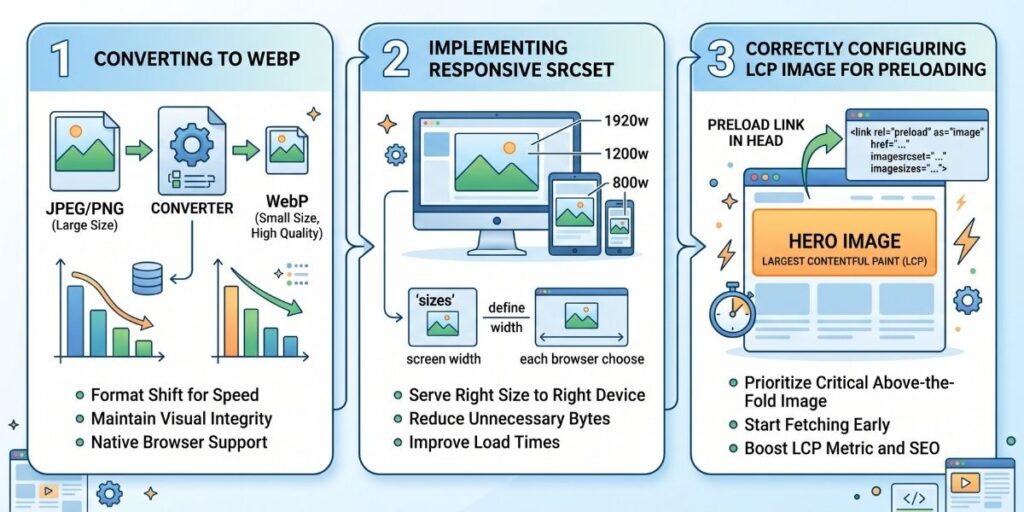
A large JPEG hero image at full browser width fails LCP regardless of how fast the hosting infrastructure is. The same image served as WebP format, sized responsively to the actual display dimensions, with explicit width and height attributes set in HTML, with lazy loading disabled for the above-the-fold image, and preloaded in the page head, consistently passes LCP. The technical sequence is straightforward and produces meaningful improvements for most travel pages that have never had this treatment applied.
For context on what good LCP looks like in practice, the WordPress speed optimization guide on KatvTech covers the plugin and caching configuration that underlies most of these fixes for WordPress-based travel sites - which describes the majority of independently published travel content.
Interaction to Next Paint measures how quickly the page responds to user interaction. For travel sites, the primary INP problem is third-party JavaScript: booking widgets, affiliate partner scripts, and social sharing tools all add JavaScript execution time that delays the browser's ability to respond to user clicks. The fix is loading third-party scripts after the page's primary content is interactive, using async and defer attributes, and auditing which third-party tools are actually producing value relative to their performance cost.
Cumulative Layout Shift measures how much the page layout shifts unexpectedly during loading. Travel sites with embedded maps, dynamic content blocks, and images without explicit dimensions produce CLS scores that cause real user experience problems: text shifts under the cursor as images load, buttons move just before a click registers. Setting explicit width and height attributes on all images and reserving space for dynamically loaded content with CSS aspect-ratio or min-height declarations resolves most CLS issues.
The Travel Sites Core Web Vitals Fixes Ranked by Impact
The travel sites Core Web Vitals fixes produce returns in a consistent order based on how directly each addresses the structural problems of travel content. Image optimization produces the highest return: converting to WebP, implementing responsive srcset, and correctly configuring the LCP image for preloading moves most travel pages from poor to good in a single implementation pass. This is the fix to do first, before anything else.
The second highest-return fix is replacing live map embeds with static map images. Google Maps embeds load significant JavaScript that delays interactivity. A static map image that links to the full interactive Google Maps version eliminates this load cost entirely. Users who need the interactive map follow the link; users who just want location context get it instantly from the static image. The performance trade is completely favorable.
Font loading optimization is the third-tier fix that most travel sites miss. Custom typefaces require network requests that block rendering when not configured correctly. Preloading critical fonts, using font-display: swap to ensure text renders immediately in the fallback font while the custom font loads, and limiting the number of font weights to the minimum needed produces LCP improvements that compound with the image optimizations.
The Ranking Impact and AI Search Implication
Google uses Core Web Vitals as a tiebreaker between pages of similar content quality, and the tiebreaker operates at the margin where most competitive ranking battles are decided. A travel page that passes all three Core Web Vitals assessments will outrank a page of equivalent content quality that fails them, all else equal. The improvement compounds over time as better page experience signals accumulate.
Requesting indexing through Search Console after completing Core Web Vitals improvements accelerates the point at which the improved signals are recognized rather than waiting for the next scheduled crawl.
The AI search implication is parallel: AI Overviews draw from pages that load reliably and quickly. Travel content that answers planning queries clearly is valuable AI citation material, but the citation systems are less likely to process pages that time out or load slowly. At Yellow Tent Adventures, the virdataro.com post on global hiking culture is a good example of travel content structured to earn citations: specific, factual, evergreen, and technically clean. Travel sites Core Web Vitals optimization improves both traditional ranking and AI citation eligibility simultaneously, making it the highest-leverage technical investment available to a travel publisher.
Guest Author: This post was contributed by Yellow Tent Adventures, an outdoor travel site covering hiking, wildlife, and life on the road done thoughtfully.

Want to share your story, expertise, or unique perspective with our audience? We’re always looking for fresh voices – drop us a line or head over to our contact page to get started!