
Recipe schema markup is the structured data implementation that has produced the most consistent technical SEO gains of anything we have tested at Sugar-Press.com, and the food publishing space makes the competitive case clearly: the large publishers that dominate recipe search results have implemented complete recipe schema markup as a technical baseline for years. For smaller food sites, closing this gap is one of the highest-return technical investments available because the difference between having recipe schema markup and not having it is the difference between appearing in recipe rich results and not appearing in them at all.
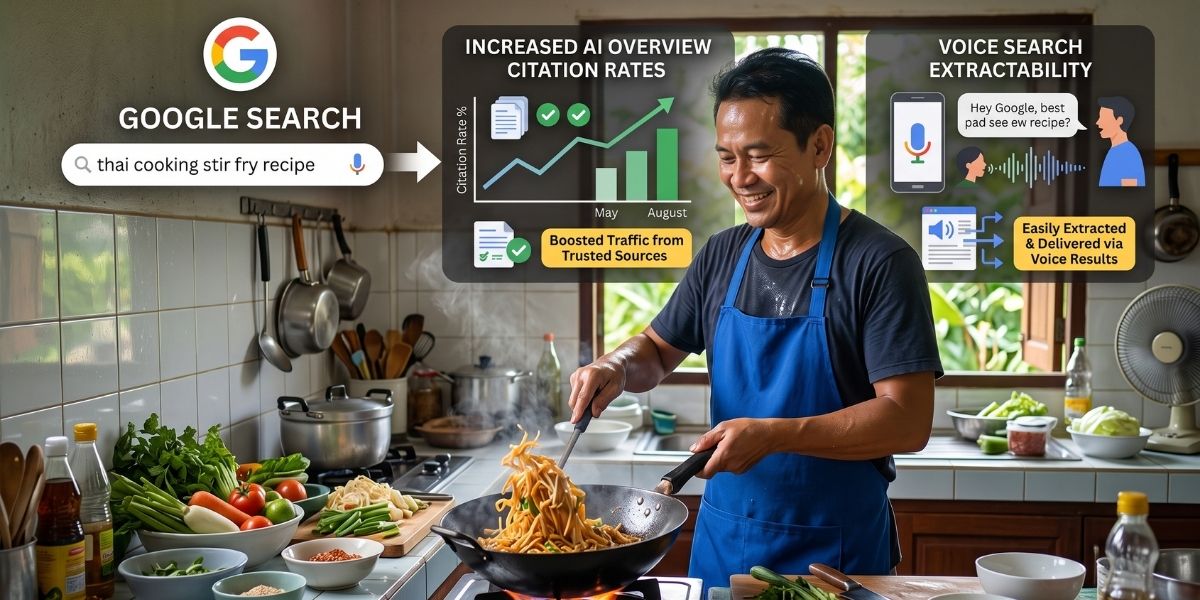
The gains come from three sources simultaneously: rich results in Google search, increased AI Overview citation rates, and voice search extractability. Understanding how each works helps prioritize the implementation correctly and avoid the common mistakes that reduce the return on the technical work.
What Recipe Schema Markup Enables Technically
Recipe schema markup uses the Schema.org Recipe type, implemented as JSON-LD in the page head. This format does not interfere with visible content and works cleanly with WordPress, Squarespace, and custom CMS implementations. The JSON-LD format is Google's preferred structured data implementation specifically because it separates the markup from the content, making it easier to maintain and less prone to rendering errors.
The required properties for Google's recipe rich result eligibility are the recipe name, the image, and the author. These are the minimum. The recommended properties that maximize rich result display and AI extractability include: cookTime, prepTime, totalTime, recipeYield, recipeIngredient, and recipeInstructions. Completeness across all recommended properties produces significantly better rich result display than minimum compliance, particularly for the featured snippet and knowledge panel placements that drive disproportionate click-through rates.
The recipeInstructions implementation is where most recipe schema markup falls short. Google accepts instructions as either a single text block or as an ordered list of HowToStep objects. The HowToStep format, which includes a name and descriptive text for each step, produces the most complete voice search response and the cleanest AI extraction. A recipe with instructions marked up as a single block is technically compliant but loses the step-by-step extraction that makes voice search responses coherent and AI Overviews actually useful to someone trying to cook.
Getting pages indexed efficiently matters before schema can do its work. XML sitemaps and robots.txt configuration ensures recipe pages are being discovered and processed. Requesting indexing through Search Console after implementing schema on priority pages accelerates the point at which the new structured data signals are recognized.
The AI Overview Impact of Recipe Schema Markup
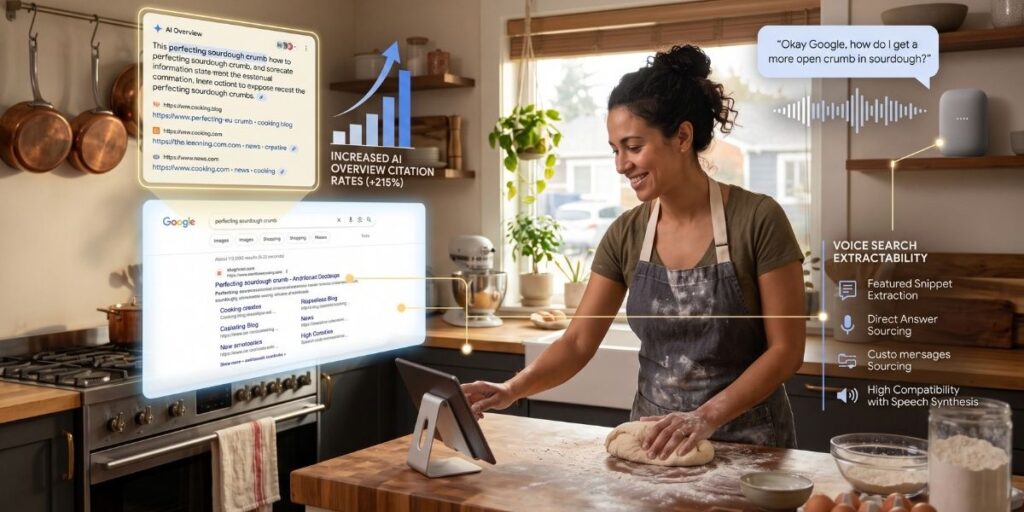
AI Overviews cite recipe content from sources with complete recipe schema markup at higher rates than from sources without it. The mechanism is straightforward: the structured data gives the AI system a reliable, verified signal about what the page contains and how to extract the relevant information without having to parse unstructured prose. A recipe page without schema requires the AI system to infer structure from formatting and context. A recipe page with complete schema presents the information in a format the system can read directly and cite with confidence.
The research on structured data and AI citation rates consistently supports this: content that is machine-readable through schema produces better AI extraction outcomes than equivalent content presented only in prose. For food sites specifically, where AI Overviews for cooking queries are becoming a primary traffic source, the schema implementation directly affects whether a recipe appears in the answer or only in the organic results below it.
At Sugar Press, the how to debone a chicken thigh technique post illustrates the principle: specific skill, precise steps, clear technique name. Structured content of that kind earns AI citations because there is an extractable answer to a specific question. Recipe schema markup makes that extraction reliable and consistent rather than dependent on the AI system correctly parsing the prose.
The Competitive Landscape and What It Means for Smaller Food Sites
A smaller food site with genuinely excellent recipe content and complete, well-implemented recipe schema markup can appear in rich results alongside Allrecipes and Food Network for specific queries where its recipe is genuinely the best answer. The schema levels the technical playing field between sites of different sizes in a way that traditional authority signals do not.
The nutritional information schema is a secondary opportunity that most food sites ignore. NutritionInformation type markup, including calories per serving at minimum, makes recipe pages searchable by nutritional criteria. Users filtering for high-protein recipes or low-calorie options are working with data that only surfaces in results if the schema exists to make it searchable.
The implementation is a one-time technical investment with indefinite compounding return. For sites with large recipe archives, prioritizing the highest-traffic pages first and working through the catalog produces measurable gains at each stage rather than requiring complete implementation before seeing any return.
Guest Author: This post was contributed by Sugar Press, a cooking site focused on technique, seasonal ingredients, and recipes that are genuinely worth making

Want to share your story, expertise, or unique perspective with our audience? We’re always looking for fresh voices – drop us a line or head over to our contact page to get started!