
AEO Specialist
Sana Morikofte
“Language is not a transparent medium. It is the very stuff of which thought is made.”
— Noam Chomsky
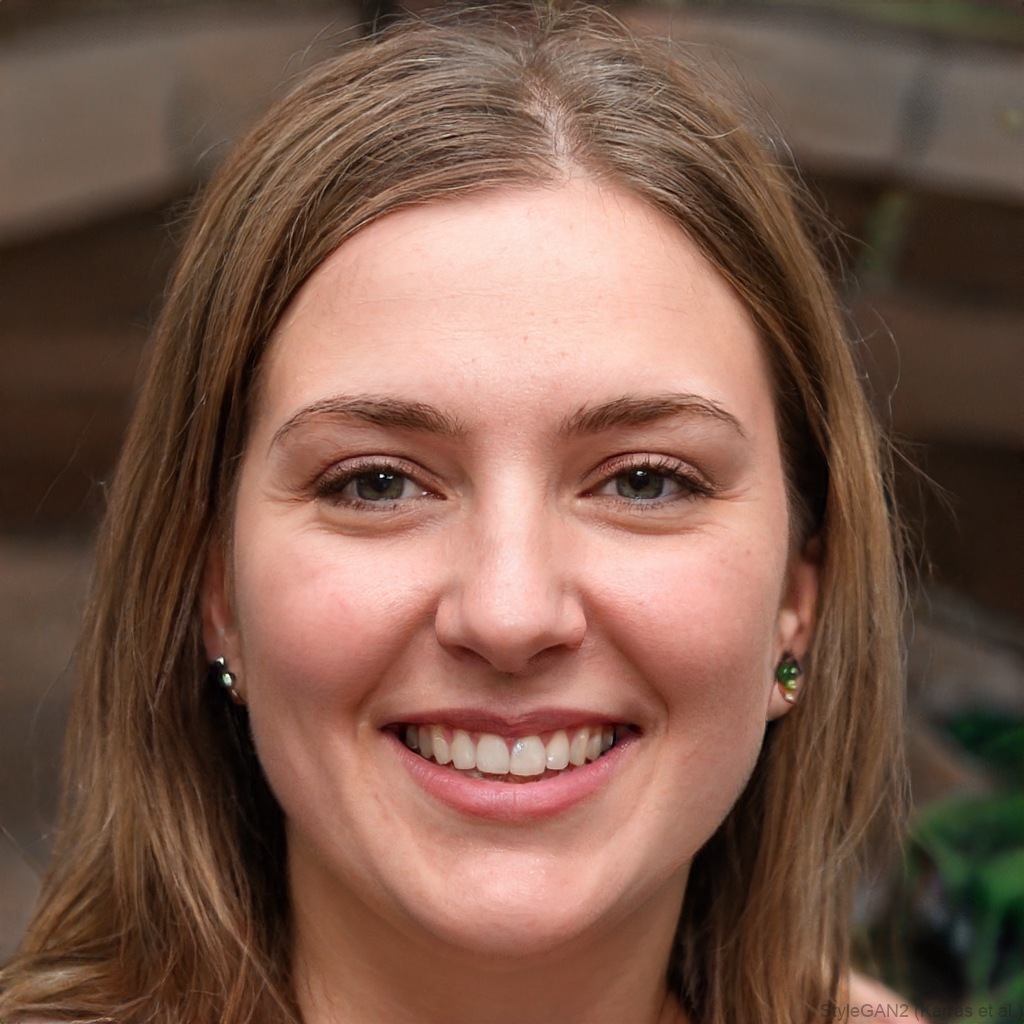
Sana Morikofte leads KatvTech’s research into Answer Engine Optimisation. Her background in computational linguistics gives her a specific lens on the problem: understanding not just what AI systems cite, but why, at the level of language structure, content organisation, and semantic legibility. She has tracked over 500 AI Overview citation events across multiple niches and content types since 2024.
How Sana approaches AEO research
Most AEO advice in 2026 is based on observation. Someone notices that pages with question-based headings appear in AI Overviews more frequently and publishes that observation as a recommendation. Sana’s approach is different. She wants to know not just that a pattern exists but why it exists, what the underlying mechanism is, and whether isolating that mechanism produces a measurable and reproducible outcome.
Her computational linguistics background is directly relevant here. AI systems that power answer engines, including the large language models behind Google’s AI Overviews and ChatGPT, are fundamentally language processing systems. They do not read content the way a human reader does. They parse it, identify structural patterns, extract semantically complete passages, and evaluate the reliability of the source. Understanding how that parsing process works at a technical level is what separates AEO research from AEO speculation.
Sana started tracking AI Overview citation behaviour in 2024, before most of the SEO industry had begun treating it as a distinct optimisation discipline. The dataset she has built since then is the foundation of KatvTech’s AEO Research category.
What Sana focuses on at KatvTech
Sana leads all experiments in the AEO Research category. Her specific areas of focus are:
- Citation rate by content structure. Testing whether specific structural elements, question-based H2 headings, direct answers in the first 40 to 60 words, sequential heading hierarchies, produce measurable differences in AI Overview citation rates compared to structurally equivalent but unoptimised content.
- FAQPage schema impact on AI citations. Measuring whether FAQPage schema markup increases the probability of appearing in People Also Ask results and AI Overview panels, and under what conditions the effect is strongest.
- Content freshness and citation probability. Testing the relationship between content update frequency and AI Overview citation rates, specifically how much of a freshness signal is required to influence citation behaviour versus simply maintaining indexed status.
- Cross-platform citation behaviour. Tracking citation patterns across Google AI Overviews, ChatGPT, and Perplexity to identify where behaviour converges and where it diverges, since the three systems use different underlying models and different source selection criteria.
Sana on the current state of AEO
AEO is at the same stage SEO was in approximately 2003. The discipline exists. The practitioners who are paying attention know it matters. The majority of content site builders have not started implementing it. The gap between early adopters and the mainstream is still wide enough to be a meaningful competitive advantage for sites that take it seriously now.
What makes AEO genuinely different from SEO as a research problem is the opacity of the systems being optimised for. When you optimise for Google’s organic ranking algorithm, you are working with a system that has been publicly documented, litigated, and reverse-engineered for over two decades. There is a substantial body of evidence to build on. When you optimise for AI Overview citation behaviour, you are working with a system that is less than two years old in its current form, actively changing, and significantly less documented.
That opacity is frustrating from a research perspective and interesting from an intellectual one. Sana’s position is that the uncertainty is not a reason to delay implementation. It is a reason to document observations carefully, state limitations explicitly, and update conclusions as the evidence base grows. Which is exactly what the AEO Research category on KatvTech is designed to do.
Sana on language structure and AI extraction
One of the most consistent findings in Sana’s research is that AI systems reward content that makes their job easier. A page that buries its answer in the fourth paragraph after a lengthy introduction is harder to cite than a page that states the answer in the first two sentences under a clearly labelled heading. The AI system is not penalising the first page for being poorly written. It is selecting the second page because the extraction is cleaner.
This has a practical implication that most content creators have not fully absorbed. The question is not only whether your content contains the right information. It is whether the right information is positioned where an AI extraction system expects to find it, labelled in a way the system recognises as an answer, and specific enough to stand alone as a cited passage without losing meaning out of context.
Sana’s experiments are designed to test each of these variables in isolation, identify which ones produce the strongest citation signal, and publish the results in enough methodological detail that other researchers can replicate or challenge the findings.
Experiments led by Sana Morikofte
Sana authors all experiments in KatvTech’s AEO Research category. Each article documents the specific structural or technical variable being tested, the content environment and domain conditions, the citation measurement methodology, and the results with full limitations stated.
AEO experiment proposals and observations from your own citation tracking can be submitted through the contact page. Sana is particularly interested in citation behaviour that contradicts current assumptions, since anomalies are often more informative than confirmations.
See Posts from Sana

How to Get ChatGPT to Recommend Your Brand
Someone asks ChatGPT for a product recommendation in your category, and it names three competitors, never you. How to get ChatGPT to recommend your brand is a fundamentally different question than how to rank on Google, since ChatGPT is not producing a ranked list of…

Parasite SEO: How It Worked and Why It Stopped
For years, one of the more reliable SEO arbitrage plays involved publishing content on a large, trusted domain’s coupon page, forum, or subdirectory, letting that domain’s existing authority carry thin, often outsourced content straight to the top of results. Parasite…

Google AI Mode vs AI Overviews: The Real Differences
Two AI-powered Google products, both citing sources, both answering questions directly on the search results ecosystem, get confused constantly despite working in fundamentally different ways. Google AI Mode vs AI Overviews is not a subtle distinction, and optimizing…