Internal linking topical authority is the technical SEO mechanism that has produced the most consistent ranking improvements is always the one that takes the longest to understand properly. The concept is straightforward in theory: a well-structured internal linking architecture tells Google not just what individual pages are about, but what the site as a whole is genuinely expert in. The execution requires more deliberate planning than most site owners apply, and the results take longer to appear than most other optimizations, which is why it is underused even by technically capable publishers.
The home renovation and sustainability niche is a useful case study for internal linking topical authority because the content naturally organizes into tight topical clusters: sustainable materials, energy efficiency, renovation planning, waste reduction. A site that covers these areas extensively but links between them haphazardly is leaving significant topical authority on the table.
How Google Uses Internal Linking to Build a Topical Map
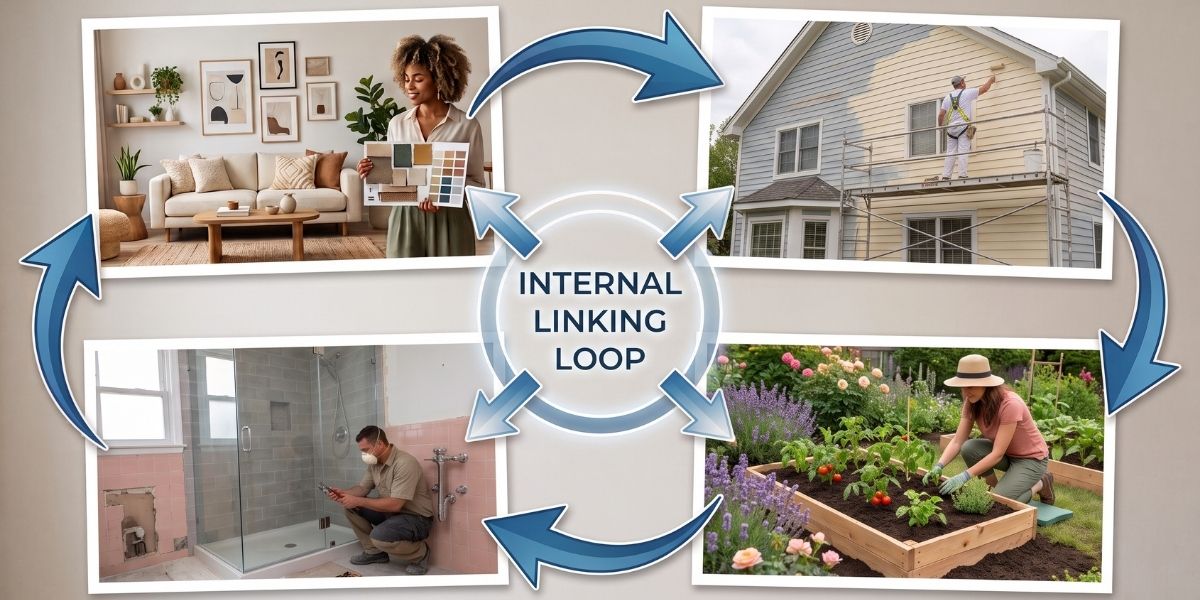
Internal linking topical authority works because Google's crawlers follow links to understand how content is related. When a page about reclaimed timber flooring links to pages about sustainable adhesives, installation methods, and sustainability certifications, and those pages link back to the flooring page and to each other, Google builds a map of a topical cluster with the flooring page at its center.
That cluster map is what topical authority actually looks like in Google's index. A site with a well-developed cluster map around sustainable flooring will rank for competitive queries in that space even against sites with stronger overall domain authority, because Google's systems can verify that the cluster site has genuine depth in the specific topic rather than surface coverage.
The absence of this structure is equally visible. A site with thirty articles on sustainable renovation materials that link to each other randomly or not at all is a site whose topical authority is fragmented. Google sees thirty individual articles rather than an expertise cluster, and it evaluates each against the competition for its specific query without the boost that cluster membership provides.
The technical mechanism is the PageRank flow between internally linked pages. KatvTech's full internal linking strategy guide covers the PageRank mechanics in detail. A hub page that links to ten spoke pages distributes its PageRank across all ten, and each spoke page that links back to the hub returns a portion of that PageRank. The circular flow within a well-connected cluster produces higher effective PageRank for every page in the cluster than any of them would achieve in isolation.

The Hub and Spoke Structure That Produces Results
The internal linking topical authority architecture that consistently outperforms alternatives is the hub and spoke model: a comprehensive pillar page covering a broad topic acts as the hub, and more specific articles covering narrower aspects of the same topic act as spokes that link back to the hub and to each other where relevant.
For a home renovation site, a pillar page on sustainable renovation materials might hub the following spokes: reclaimed timber sourcing, natural insulation alternatives, low-VOC paint specification, recycled content flooring options, and sustainable tile and stone. Each spoke page covers its specific topic in depth, links to the hub, and links to the other spokes where relevant. The hub links to all spokes. The result is a cluster of interconnected content that signals concentrated expertise rather than isolated articles.
The SEO research consensus on this structure is consistent: sites that implement deliberate cluster architecture see ranking improvements for both hub and spoke pages within three to six months of consistent implementation. The hub page benefits first as its internal authority concentration increases. The spoke pages follow as their membership in a recognized cluster raises their individual standing for specific queries.
Getting the crawl foundation right matters before any of this: XML sitemaps and robots.txt configuration ensures Google can find and index the pages your internal linking structure is trying to signal. A perfectly structured cluster that Google cannot crawl efficiently is wasted architecture.
The Anchor Text Principle
The internal linking topical authority signal is maximized when the anchor text used in internal links is descriptive and topically relevant rather than generic. Descriptive anchor text tells Google about the destination page's content. Generic anchor text like "click here" or "read more" tells Google nothing. Across a site's full internal linking structure, the cumulative signal from descriptive anchor text produces a meaningful topical map, while generic anchor text produces noise.
The Audit That Reveals the Gaps
The internal linking topical authority audit that surfaces the most actionable opportunities is an orphan page analysis combined with a link depth analysis. Orphan pages with no internal links pointing to them are invisible to Googlebot between sitemap crawls and accumulate no cluster authority regardless of their content quality. Every piece of content on a site should have at least two to three internal links pointing to it from related, already-indexed pages.
At Wasteless Living, our sustainable tourist content is a good example of how deliberate cluster membership changes a page's performance: connected to related content on travel sustainability, eco-conscious choices, and low-impact living, it performs significantly better than it would as a standalone article with no cluster context. Internal linking topical authority is not a theoretical concept. It is a structural choice that compounds into ranking outcomes over time.
Guest Author: This post was contributed by Wasteless Living, a sustainable home and renovation site covering practical improvements that reduce waste and add lasting value.

Want to share your story, expertise, or unique perspective with our audience? We’re always looking for fresh voices – drop us a line or head over to our contact page to get started!