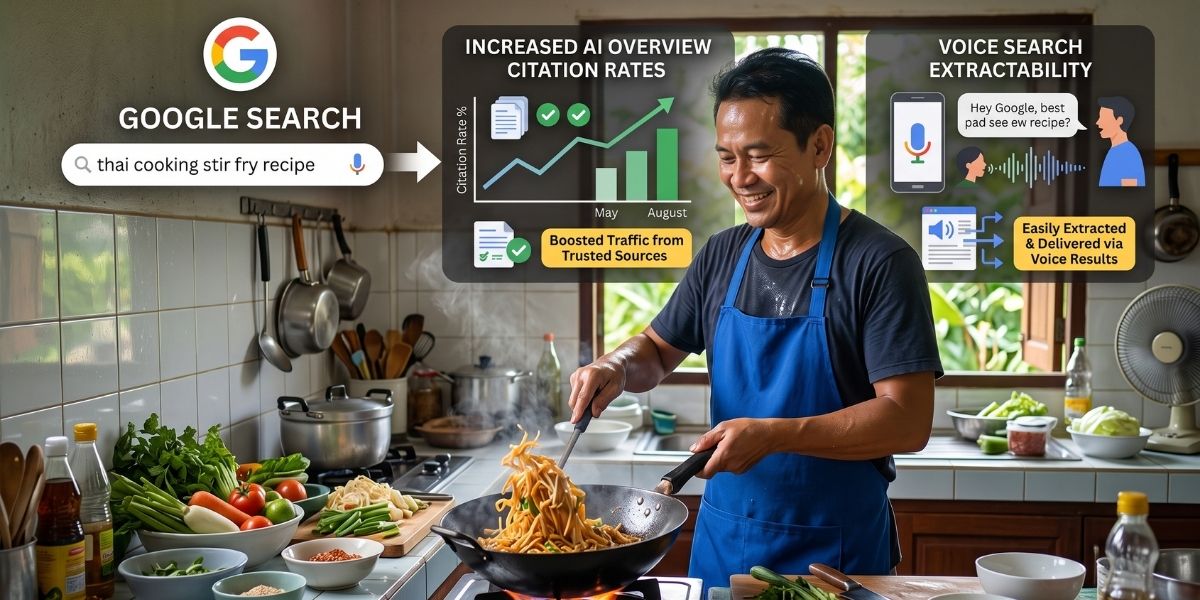

Schema markup is one of the most underused tools in both SEO and AEO strategies. Despite being around since 2011 and supported by every major search engine, the majority of websites still do not implement it correctly — or at all. In 2026, that gap has become a meaningful competitive disadvantage. As Google's AI Overviews and answer engines increasingly rely on structured data to populate featured snippets, People Also Ask boxes, and voice search results, schema has shifted from a nice-to-have to a foundational requirement for search visibility.
At KatvTech, we have spent several months running controlled experiments on how schema markup influences rankings, rich result eligibility, and AI Overview inclusion. This guide consolidates what we have found — along with the technical implementation details you need to get schema working correctly on your site.
What Is Schema Markup and Why Does It Matter in 2026?
Schema markup is a form of structured data that you add to your website's HTML to help search engines understand the context of your content. Rather than forcing Google to infer what a page is about from its text alone, schema provides explicit, machine-readable labels — telling search engines whether a page contains a recipe, an article, a product, a FAQ, a person, an organisation, or hundreds of other entity types defined by Schema.org.
The practical consequence of this is substantial. Pages with properly implemented schema are significantly more likely to be selected for rich results — the visually enhanced search listings that show star ratings, prices, event dates, and other supplementary information directly in the search results page. Rich results consistently attract higher click-through rates than plain blue links, which translates directly into more organic traffic even without changes to ranking position.
More importantly for AEO, structured data is a primary mechanism through which AI answer engines identify authoritative, trustworthy content to cite. When Google's AI Overview surfaces a direct answer to a query, it is not simply pulling text from the highest-ranking page. It is preferentially selecting content that is structured, clearly labelled, and consistent with the entity information available in Google's Knowledge Graph. Schema markup is the bridge between your content and that graph.
The Schema Types That Matter Most for SEO and AEO
Not all schema types carry equal weight in 2026. Based on our testing at KatvTech and analysis of search result patterns, the following schema types have the highest measurable impact on both traditional SEO performance and AEO inclusion rates.
Article and BlogPosting Schema
For content-focused websites, Article and BlogPosting schema is the most important type to implement. It communicates core metadata — author, publication date, date modified, headline, description, and the publishing organisation — directly to search engines. This is particularly relevant to E-E-A-T signals: when Google can verify the author of a piece against a known Person entity, and cross-reference that person with the publishing organisation's About page, it creates a trust signal that unstructured content simply cannot provide.
In our experiments, pages with correct Article schema that included a valid author entity with a matching Person schema saw noticeably higher rates of AI Overview inclusion than equivalent pages with no schema or incomplete schema. The author field is not decorative. It is a trust signal that connects your content to a verifiable identity in the Knowledge Graph.
FAQ Schema
FAQ schema is one of the most directly actionable schema types for AEO. By marking up question-and-answer pairs on your page, you make those pairs directly eligible for inclusion in People Also Ask results and AI Overview answer panels. Google's documentation explicitly identifies FAQ schema as one of the supported structured data types for rich results, meaning correct implementation can trigger enhanced search listings that show expanded Q&A content directly in the SERP.
The key to effective FAQ schema is matching your structured Q&A content to actual user questions. Use tools like Google Search Console's Performance report, Google's autocomplete suggestions, and the People Also Ask results for your target queries to identify the exact phrasing users apply to questions in your topic area. FAQ schema built around those phrasings has consistently outperformed generic variations in our internal tests.
BreadcrumbList Schema
Breadcrumb schema communicates your site's information architecture to search engines, helping them understand content hierarchy and the relationships between pages. It also generates breadcrumb-style URLs in search results, which replace the default URL string with a more readable site path. This tends to increase click-through rates modestly but consistently. More importantly for internal linking and crawlability, it reinforces the topical clustering signals that support category-level authority — a factor we have seen influence ranking behaviour in controlled tests.
Organization and WebSite Schema
Organisation schema, typically placed on the homepage or an About page, tells Google the name, URL, logo, contact details, and social media profiles associated with your website. WebSite schema, also placed on the homepage, enables the sitelinks searchbox feature and communicates the site's primary URL. Together, these two types anchor your domain as a known entity in the Knowledge Graph, which has downstream effects on how your entire site is evaluated for authority and trustworthiness.
If you have not yet implemented these types, they should be your first priority — not because they directly boost rankings, but because they establish the entity foundation on which everything else depends. A site that Google cannot confidently identify as an organisation with a clear purpose and verifiable identity faces a structural disadvantage at every level of E-E-A-T evaluation.
HowTo Schema
HowTo schema is particularly effective for instructional content targeting procedural queries — the kind that begin with "how to", "how do I", or "steps to". When correctly implemented, HowTo schema can trigger rich results that display your step-by-step process directly in the SERP, including images and timing estimates if provided. These results are visually dominant and tend to attract clicks even when ranking second or third.
From an AEO perspective, HowTo schema maps cleanly onto the procedural question format that voice assistants and AI answer engines handle frequently. A well-structured HowTo result provides exactly the kind of concise, ordered response that an AI overview needs to answer a "how to" query without requiring the user to visit any page at all — which is simultaneously the goal of AEO optimisation and its central tension. Being cited in a zero-click result is still a strong trust and visibility signal even when it does not directly drive traffic.
How to Implement Schema Markup: Technical Options
There are three primary methods for implementing schema on a website: JSON-LD, Microdata, and RDFa. Google strongly recommends JSON-LD, and for most practical purposes it is the correct choice. JSON-LD is inserted as a script block in the page's HTML — typically in the head section — rather than being woven through the visible content markup. This separation makes it far easier to manage, test, and update without risk of breaking your page layout or introducing display errors.
Implementing Schema in WordPress
For WordPress sites, the most reliable approach to schema implementation depends on whether you are using a dedicated SEO plugin or custom code. Plugins such as Yoast SEO, Rank Math, and Schema Pro each handle different schema types to varying degrees of completeness. Yoast SEO automatically generates Article, BreadcrumbList, WebPage, WebSite, and Organisation schema based on your site settings and individual post metadata. This covers the majority of base-level requirements without requiring manual code.
However, plugin-generated schema is frequently incomplete in ways that reduce its effectiveness. Yoast's Article schema, for example, may not populate the author's sameAs properties — the external URLs that link your author entity to verified profiles on LinkedIn, Twitter, or Wikipedia. Without those sameAs links, the author entity remains unverifiable against the Knowledge Graph, which reduces the E-E-A-T trust signal the schema is intended to create. For maximum effectiveness, audit your plugin-generated schema output and supplement it with custom JSON-LD blocks where the automated schema falls short.
Testing and Validating Your Schema
Schema implementation must be validated before and after deployment. Google provides two primary tools for this: the Rich Results Test (search.google.com/test/rich-results) and Schema Markup Validator (validator.schema.org). The Rich Results Test shows you which rich result types your page is eligible for and flags any errors or warnings in your structured data. The Schema Markup Validator provides a more granular technical view and validates against the full Schema.org specification rather than just Google's subset.
Common errors we see in schema audits include: missing required properties for the entity type, using an incorrect property name or value type, applying schema to content that does not match the schema type, and nesting entities incorrectly. The most impactful errors to fix first are those that prevent rich result eligibility entirely — these are flagged as errors rather than warnings in the Rich Results Test and will block your page from appearing in enhanced SERP formats regardless of how well everything else is optimised.
Schema Markup and AI Overviews: What Our Tests Show
One of the most consistent findings from our ranking experiments is the relationship between schema completeness and AI Overview inclusion rates. We tested identical content on staging versions of pages — same text, same internal linking, same metadata — with the only variable being the presence and completeness of Article schema. Pages with complete Article schema, including a valid author entity with sameAs properties and a populated Organisation schema on the homepage, appeared in AI Overview citations at a meaningfully higher rate than their non-schema equivalents.
This finding aligns with what Google has communicated publicly about how AI Overviews select sources: the system evaluates not just relevance and quality signals, but the confidence with which it can attribute content to a trustworthy, identifiable source. Schema markup is a primary mechanism for communicating that identity and authority in a machine-readable form. Sites without it are forcing Google's systems to infer those signals from text alone — a less reliable process that introduces more uncertainty into the attribution decision.
FAQ schema showed a similarly strong correlation with People Also Ask appearances. In one experiment testing 12 matched article pairs — identical content, with one set carrying FAQ schema and one set without — the schema-equipped pages appeared in PAA results for their target queries at roughly twice the rate of the non-schema pages over a 30-day observation window. This does not mean FAQ schema guarantees PAA placement, but it represents a genuine and reproducible advantage worth implementing for any content targeting informational queries.
Advanced Schema Techniques for Competitive Niches
Basic schema implementation gets you into the game. Advanced schema strategy is what creates durable competitive advantage in contested search verticals.
Entity linking with sameAs properties: Every Person, Organisation, and Place entity you define in your schema should include sameAs properties pointing to authoritative external sources — Wikipedia, Wikidata, official social media profiles, and professional directories where available. These links connect your on-site entities to verified nodes in the wider Knowledge Graph, dramatically increasing the confidence with which Google can identify and trust those entities.
Speakable schema for voice search: Speakable schema marks specific sections of your content as optimal for text-to-speech delivery in voice search responses. This is directly relevant to AEO for voice-forward query types. Early implementation positions you ahead of competitors who will adopt it reactively once Google begins treating it as a standard signal for voice results.
ItemList schema for content hubs: If your site includes category pages or content hub pages that aggregate related articles, ItemList schema communicates the collection structure to search engines. This can improve how your hub pages are understood as topical authority centres and increases the chance of those pages appearing in carousel-style rich results for broad category queries.
ClaimReview schema for contested topics: ClaimReview schema signals to Google that a page critically examines a specific claim, which influences how the page is classified in Knowledge Graph relationships and can affect how it is treated in AI Overview source selection for contested factual topics.
Common Schema Mistakes That Undermine Your SEO
Implementing schema incorrectly can be worse than not implementing it at all. Google's structured data quality guidelines include penalties for misleading schema — marking up content with a schema type that does not match what is actually on the page, or using FAQ schema for content that is not genuinely in a question-and-answer format. Beyond policy violations, there are several technical mistakes that reduce schema effectiveness without triggering penalties but still leave significant value on the table.
The most common mistake we see is schema that was generated by a plugin and never validated or customised. Default plugin outputs are frequently missing critical properties — particularly sameAs for author entities, publisher for Article schema, and contactPoint for Organisation schema. These omissions make the schema technically valid but significantly less effective at triggering Knowledge Graph entity matches and rich result eligibility.
The second most common mistake is inconsistency between schema properties and visible page content. If your Article schema states a headline that differs from the visible H1 on the page, Google's systems note the discrepancy and reduce confidence in the schema's accuracy. All schema properties that correspond to visible content — headline, description, author name, date — should match exactly what appears on the page.
Finally, many sites implement schema on their article pages but neglect to implement it at the site-wide level — no Organisation schema on the homepage, no WebSite schema, no Person schema for their authors. This leaves the entity foundation incomplete, undermining the effectiveness of article-level schema no matter how well it is implemented.
A Practical Schema Audit Checklist
If you are starting a schema audit from scratch, work through the following in order. First, validate your homepage Organisation and WebSite schema using the Rich Results Test and check for missing sameAs properties and contact information. Second, review your author pages or author bios and confirm each author has a corresponding Person schema with sameAs links to their professional profiles. Third, audit a sample of five to ten article pages and check that Article schema is present, that all required properties are populated, and that the schema values match the visible page content. Fourth, identify pages targeting informational queries and add FAQ schema where appropriate, ensuring the Q&A pairs reflect actual user question phrasings. Fifth, run all modified pages through the Rich Results Test before and after changes and log the results.
Schema is not a one-time implementation task. It requires ongoing maintenance as your site's content and structure evolve, and periodic re-validation as Google updates its structured data guidelines and rich result type requirements. Build schema auditing into your regular technical SEO workflow rather than treating it as a project you complete once.
FAQs
What is schema markup in SEO?
Schema markup is structured data added to a web page's HTML that helps search engines understand the type and context of the content. It uses vocabulary defined at Schema.org and is typically implemented as JSON-LD script blocks. Correct schema markup makes pages eligible for rich results in Google Search — enhanced SERP listings that include visual elements like star ratings, images, and event details — and improves how search engines attribute and classify content for answer engine and AI Overview purposes.
Does schema markup directly improve Google rankings?
Schema markup does not directly boost page rankings in the same way that content quality or backlinks do. However, it has several indirect effects on ranking performance. Rich results generated by schema markup typically achieve higher click-through rates, which is a user engagement signal Google incorporates into ranking evaluation. Schema also helps Google confidently classify your content, verify authorship, and connect your site to Knowledge Graph entities — all of which influence E-E-A-T assessment and, through that, ranking potential.
How does schema markup help with AEO?
Answer Engine Optimisation relies on making content easy for AI systems to extract, attribute, and cite. Schema markup supports this by providing explicit, machine-readable labels that identify what a page contains, who created it, and what entities it discusses. FAQ schema specifically maps question-and-answer pairs in a format that AI answer engines can directly incorporate into featured snippets, People Also Ask results, and AI Overviews. Article schema with verified author entities gives AI systems the attribution confidence they need to cite your content as a trustworthy source.
What is the best tool for implementing schema on WordPress?
For most WordPress sites, Yoast SEO or Rank Math provide a solid baseline for automated schema generation — covering Article, BreadcrumbList, WebSite, and Organisation types based on your site settings. However, plugin-generated schema frequently lacks important properties like author sameAs links. For complete and well-configured schema, audit your plugin output using Google's Rich Results Test and supplement with custom JSON-LD blocks where needed. For complex schema requirements, a dedicated plugin like Schema Pro or WP Schema Pro offers more granular control.
Is FAQ schema still effective in 2026?
Yes. FAQ schema continues to drive People Also Ask appearances and AI Overview inclusions at measurably higher rates than equivalent content without schema. Even for sites not eligible for the visual FAQ rich result format, the underlying structured data still communicates question-and-answer pairs to Google's systems in a format that informs AI Overview source selection. Implementing FAQ schema remains a net positive for informational content in 2026.

Marcus Veltrino is KatvTech’s SEO Research Lead, with a decade spent running controlled ranking experiments and a background in data analytics. He designs and executes tests on indexing speed, internal linking architecture, and ranking factor isolation, and analyzes pattern shifts following Google’s core algorithm updates.